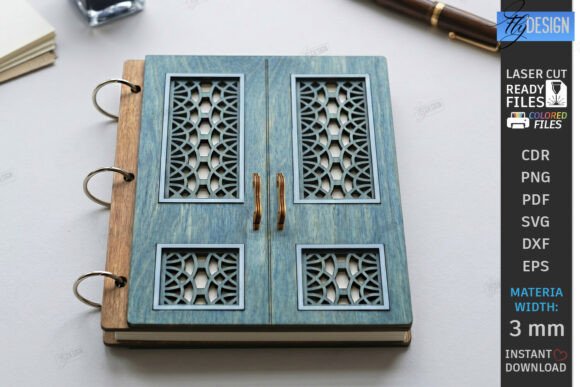
Evaluating the Miniature Door Notebook Cover Laser Cut Design
In the evolving landscape of personalized stationery and laser crafting, the intersection of functional utility and aesthetic whimsy has created a niche for highly specialized digital assets. Among these, the Miniature Door Notebook Cover Laser Cut stands out as a compelling example of how intricate design can transform a standard journal into a tactile storytelling device. For creators, small business owners, and serious hobbyists, understanding the practical application and technical requirements of such designs is essential before committing to production.
This analysis explores the structural integrity, design versatility, and market potential of this specific laser-cut overlay. By examining the file formats, material considerations, and end-user experience, we can determine whether this asset aligns with professional workflows and creative goals.
Design Philosophy and Aesthetic Appeal
The core concept behind the Miniature Door Notebook Cover Laser Cut is rooted in the fantasy and fairy tale genres. It functions not merely as a protective layer but as a narrative portal. The design typically features a detailed medieval or whimsical secret garden motif, inviting the user to "open" their thoughts through a literal door. This metaphorical connection between the physical act of opening a book and entering a imaginative space adds significant perceived value to the final product.
From a design perspective, the strength lies in its layered complexity. Unlike flat engraving, this project utilizes 3D layered plywood techniques. This approach creates depth and shadow, enhancing the visual impact without requiring excessive material thickness. The distinction between cut lines and engraved details is critical here. As noted in the technical specifications, red lines indicate cuts while black lines denote engraving. This clear delineation simplifies the setup process for operators using machines like Glowforge, xTool, or Universal Laser Systems, reducing the risk of operational errors during production.
Technical Specifications and File Compatibility
For professional users, the usability of a digital product is often determined by its file compatibility and ease of integration into existing workflows. The Miniature Door Notebook Cover Laser Cut package addresses this by providing a comprehensive zip archive containing multiple vector and raster formats:
- SVG (Scalable Vector Graphics): Ideal for most modern laser software, allowing for easy scaling and layer separation.
- EPS (Encapsulated PostScript): Preferred by users of Adobe Illustrator and CorelDRAW for precise vector editing.
- DXF (Drawing Exchange Format): Essential for users of AutoCAD or older CNC software that may not support SVG natively.
- PDF (Portable Document Format): Useful for quick previews and manual layout adjustments.
- PNG (Portable Network Graphics): Provided for reference, previewing, or sublimation printing applications.
The inclusion of these varied formats ensures that the design is accessible to a broad spectrum of creators, from those using proprietary cloud-based cutters to professionals relying on industrial-grade CAD software. However, it is crucial for users to verify that their specific machine and software combination can interpret these files correctly. While SVG is widely supported, nuances in how different platforms handle layer colors (red for cut, black for engrave) can vary. Users are advised to perform a test run on scrap material to confirm power and speed settings before committing to final stock.
Material Considerations and Construction Quality
The effectiveness of a Vintage Wooden Journal Jacket relies heavily on material selection. Plywood is the standard recommendation for this type of layered construction due to its stability and attractive edge grain when cut. Typically, 3mm birch plywood works well for the base layers, while thinner veneers or cardstock might be used for intricate decorative inserts if the design allows.
One must consider the kerf—the width of the material removed by the laser beam—when assembling layered pieces. High-quality vector files account for this, but slight adjustments may be necessary depending on the laser lens and material density. The "3D Layered" aspect implies that multiple pieces are stacked or joined. This requires precise cutting tolerance. If the fit is too loose, the structure feels cheap; if too tight, assembly becomes frustrating and risks breaking delicate components.
Furthermore, the durability of the final product depends on the adhesive used. For a literary gift or daily-use sketchbook, a strong wood glue or double-sided adhesive tape designed for crafts is recommended. The resulting Wooden Accessories should feel robust enough to protect the notebook inside while remaining lightweight enough not to hinder portability.
Target Audience and Market Application
Who benefits most from integrating the Miniature Door Notebook Cover Laser Cut into their product line? The primary audience includes:
- Etsy Sellers and Craft Entrepreneurs: Those looking to differentiate their stationery offerings with high-margin, visually striking items. The whimsical nature appeals to fans of fantasy literature, role-playing games, and creative writing.
- Educators and Librarians: Creating themed journals for student projects or reading logs can increase engagement. The "secret garden" or "medieval portal" theme aligns well with literature units.
- Event Planners: These covers can serve as unique guest books for weddings or themed parties, offering a keepsake element that standard binders lack.
- Hobbyists and Makers: Individuals seeking challenging yet rewarding projects that showcase their laser cutting skills. The multi-layer aspect provides a satisfying build process.
For marketers and bloggers, this product offers excellent content opportunities. The visual appeal of a wooden door opening to reveal a blank page is highly shareable on social media platforms like Instagram and Pinterest. It serves as a tangible example of "slow living" and artisanal craftsmanship, trends that continue to resonate with consumers seeking authenticity in mass-produced markets.
Practical Limitations and Recommendations
While the design offers significant creative potential, it is not without limitations. First, the complexity of the cut means longer production times compared to simple envelope-style covers. This impacts pricing strategies for businesses; the labor and machine time must be factored into the final cost. Second, the fragility of intricate laser-cut details requires careful handling during shipping. Proper packaging is essential to prevent breakage of the delicate door hinges or decorative filigree.
Additionally, users should be aware that wood is a natural material. Variations in grain, color, and knot placement can affect the final appearance. What looks uniform in a digital PNG preview may have distinct character marks in real life. Educating customers about these natural variations can manage expectations and reduce return rates.
For those unfamiliar with laser cutting, the learning curve may present a barrier. Understanding the difference between vector cutting and raster engraving, as well as mastering focus height and power settings, is prerequisite knowledge. The provider’s note—"Please write me if you need other type of file, or other color size of PNG file"—suggests a willingness to support customers, which is a valuable trait when sourcing digital assets. Leveraging this support can help troubleshoot specific machine incompatibilities.
Long-Term Value and Workflow Integration
Investing in high-quality vector files like the Fairy Tale and Fantasy Door Diary Patterns offers long-term value. Unlike physical inventory, digital assets can be reused indefinitely, scaled for different notebook sizes, or modified to create new variations. A skilled designer might adjust the door dimensions to fit Moleskine, Leuchtturm, or custom-bound journals, expanding the product’s applicability.
Consistency is key for brand building. Once a creator masters the production of this specific cover, it can become a signature item. The reliability of the vector files ensures that every unit produced maintains the same geometric precision, allowing for standardized assembly processes. This consistency is vital for scaling a small business operation.
In conclusion, the Miniature Door Notebook Cover Laser Cut represents a sophisticated blend of artistry and engineering. It appeals to a demographic that values craftsmanship, nostalgia, and personalization. For professionals equipped with the right tools and materials, it offers a viable pathway to creating distinctive, high-value stationery products. Success depends not just on the quality of the digital file, but on the maker’s ability to execute the cut with precision and assemble the layers with care. By respecting the technical requirements and understanding the target audience, creators can effectively leverage this design to enhance their portfolio and engage their customers.